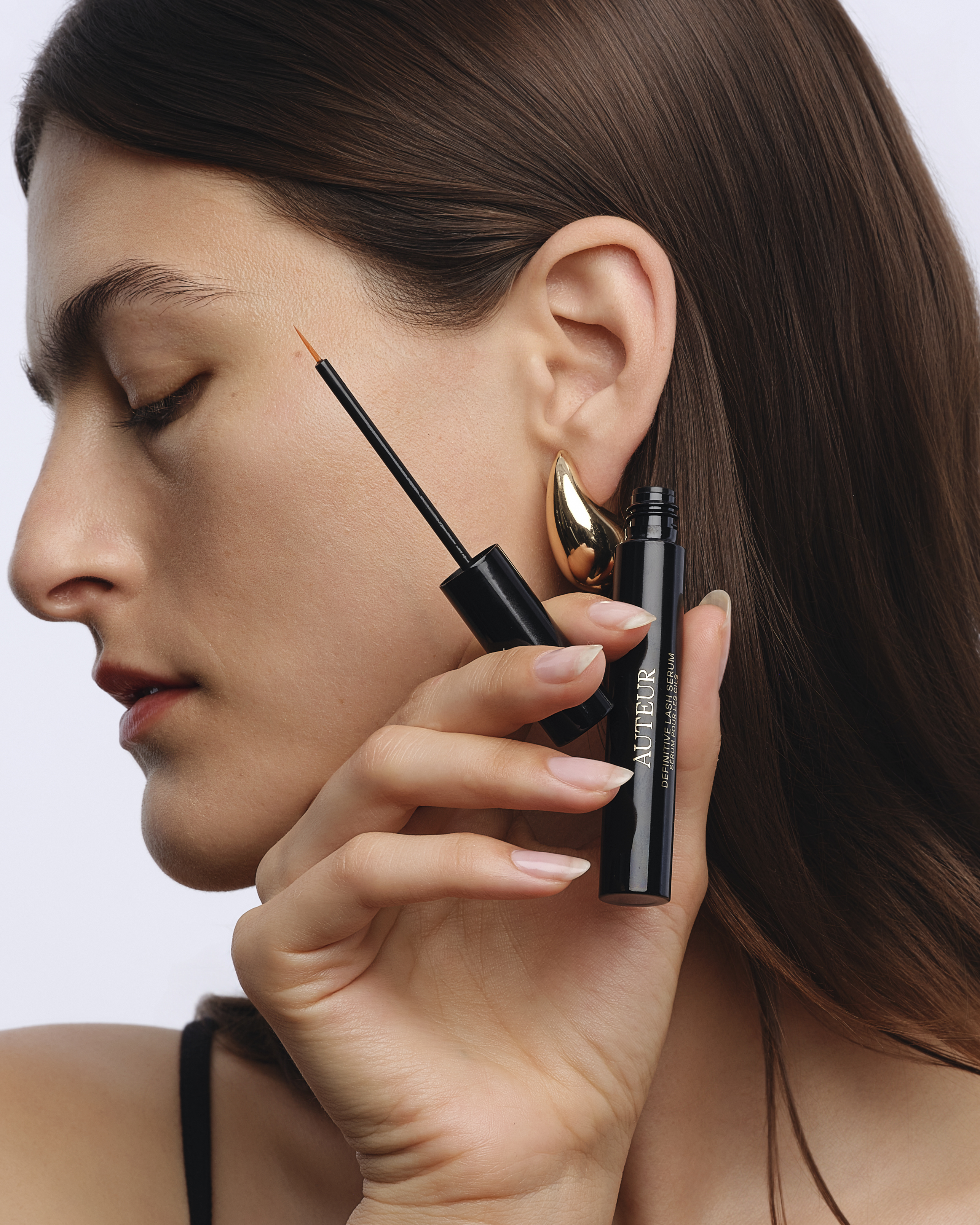
Luxury skincare branding has one problem that no amount of beautiful packaging can solve on its own: the buyer cannot see whether your product works. A handbag proves itself the moment it is held. A serum asks for faith, applied nightly, measured against a result that may take weeks to appear and is hard to attribute even then. This is why trust, not taste, is the real moat in prestige skincare, and why the brands that command the highest prices are the ones that have learned to make belief feel earned.
You are not selling a formula. You are selling the confidence to spend a meaningful sum on a promise about your own face, made by a company the buyer has never met. Everything that follows is an attempt to close that distance. The visual language, the clinical language, the texture of the cream, the tone of the founder letter: each one is either building trust or quietly eroding it. There is no neutral.
Why Skincare Is a Trust Category
Economists have a useful distinction between three kinds of goods. Search goods can be evaluated before purchase, like the cut of a coat. Experience goods reveal themselves on first use, like a restaurant meal. Credence goods cannot be fully judged even after you have used them, because the result is invisible, delayed, or impossible to separate from everything else happening to you. Skincare is a credence good in almost its purest form. You apply the product, you wait, and you are left to interpret a face that changes for a hundred reasons at once.
That uncertainty is the defining condition of the category. It is also why skincare attracts so much skepticism. The buyer has been promised radiance before and has the half-used jars to prove the promise was hollow. So when a new prestige brand arrives, it inherits a reader who is braced for disappointment, scanning for the tell that this is more of the same. Your branding is read as evidence, whether you intend it that way or not.
The market context raises the stakes further. The category is large and growing quickly, which means the skeptical buyer has more options competing for the same belief.
- $580B Projected global beauty market by 2027, up from roughly $430B in 2022 (McKinsey)
- 8% Annual growth of the premium tier to 2027, versus about 5% for mass (McKinsey)
- ~2x Potential growth of luxury and ultra-luxury beauty, toward roughly $40B by 2027 (McKinsey)
Growth like this is not only opportunity. It is crowding. As more founders trade up into prestige, the buyer is asked to choose between brands that all photograph beautifully and all claim clinical results. Therefore the differentiator cannot be the claim itself, which everyone makes. It has to be the believability of the brand making it.
Key insight: In a credence category, your brand is not the wrapping around the product. Your brand is the evidence the buyer uses to decide whether the product is worth believing before they can know.
The Proof Stack: Clinical Credibility Without Coldness
The instinct, once you accept that skincare is a trust category, is to reach for proof. Clinical trials. Percentages of actives. Dermatologist endorsements. Before and after grids. This instinct is correct, and the data supports it: consumers are asking for harder evidence, with Mintel reporting that a large majority of consumers in some markets believe beauty brands should provide more scientific backing for their claims. Proof is the price of entry into the prestige conversation.
But proof alone has a failure mode, and it is a quiet one. A brand that leads with nothing but numbers reads as a laboratory, not a luxury. It convinces the analyst in your buyer and leaves the rest of her cold. Prestige skincare is bought by a whole person, and the whole person wants to feel something about the ritual she is about to fold into her evening. Clinical credibility delivered without warmth is technically persuasive and emotionally inert, which is its own kind of failure.
The answer is to think in terms of a proof stack: layered evidence that speaks to both the rational and the emotional buyer at once. Each layer does a different job.
The layers that build belief
- Mechanism. Name the active, the concentration, and what it does at the level of skin. Specificity reads as honesty. Vagueness reads as evasion.
- Validation. Clinical testing, third-party studies, and the credentials of the people behind the formula. This is the layer skeptics check first.
- Provenance. Where the ingredient comes from, why this source, who formulated it. Provenance turns a molecule into a decision someone made on purpose.
- Sensory promise. What the product feels like, smells like, becomes on the skin. This is where credibility turns into desire.
Notice that only the first two layers are what most brands mean by clinical. The second two are what keep clinical from going cold. A brand that masters mechanism and validation but neglects provenance and sensation will be respected and rarely loved. Therefore the goal is not to choose between rigor and warmth. The goal is to stack them so the buyer never feels the seam.
Proof convinces the mind. Warmth gives the mind permission to act on what it has been convinced of.
You can see this balance handled well in brands that read as clinical and editorial in the same breath. Our work on the AUTEUR case study was built around exactly this tension: how to carry the authority of science without surrendering the feeling of a luxury object. The evidence had to be unimpeachable and the world around it had to be beautiful enough to want.
Designing for Belief: Sensory and Visual Cues
Once the proof stack is in place, the work moves to the surface, where most of the buyer's judgment actually happens. People claim to decide on evidence. They mostly decide on cues, and only then assemble the evidence to justify the decision they have already made. This is not a flaw in your buyer. It is how human judgment works, and a prestige brand that designs for it is being respectful of reality, not manipulative.
Every sensory choice your brand makes is a signal about whether it can be trusted. Consider what the buyer is reading, often without naming it.
Weight, finish, and friction are trust signals. A heavier cap, an unhurried pump, a label that resists a fingernail: each one tells the buyer that care was taken where no one was looking, which implies care was taken in the formula too.
Color and typography carry the same freight. A palette that is restrained and a typeface that is confident read as a brand with nothing to prove and therefore nothing to hide. A crowded label shouting six benefits reads as a brand that is worried, and worry is contagious. The buyer cannot test your serum in the aisle, so she tests your judgment, and your design is the only sample of your judgment she has.
The same logic governs language. Precise, unhurried copy that explains a mechanism without overclaiming earns more trust than superlatives, because superlatives are what every disappointing product also used. The brand that says less, and says it exactly, sounds like the brand that has the results to be calm about it.
This is also where you either honor or betray the proof stack from the previous section. Clinical evidence presented in a cold, generic system undercuts itself, because the buyer reads the coldness as distance and distance as risk. The same evidence presented inside a considered, sensory world reads as confidence. The data did not change. The belief did.
Key insight: Buyers cannot evaluate your formula, so they evaluate your judgment instead. Every sensory and visual cue is a sample of that judgment, and the brand with visibly better judgment is trusted to have a better product.
A Trust Framework for Prestige Skincare
Trust is not a tagline. It is a system, built from parts that reinforce each other, and it fails the moment one part contradicts the rest. The framework below is the structure underneath everything above. Read each layer as a question your brand must answer before the buyer will believe it.
Four layers that hold a prestige promise together
Evidence. Can you prove what you claim, in terms a skeptic would accept? This is the foundation. Without it, everything above is decoration on an empty box, and sophisticated buyers smell an empty box quickly.
Coherence. Does every signal agree? The price, the packaging, the copy, the founder's story, the texture of the cream, the speed of the pump. When these agree, trust compounds. When one contradicts the others, the whole structure wobbles, because the buyer notices the seam even if she cannot name it.
Restraint. Are you confident enough to leave things out? Overclaiming, over-designing, and over-explaining all read as anxiety. A prestige brand earns belief partly by what it declines to say, because calm is the posture of a brand that already has the results.
Consistency over time. Does the brand keep its promises across years, not just at launch? Trust is the only brand asset that cannot be bought quickly. It accrues through repeated, kept promises, which is precisely why a competitor can copy your formula and your aesthetic but not your reputation for telling the truth. The growth data underlines the point: prestige beauty in the United States rose roughly 7 percent in 2024 even as growth normalized across the wider market, and the brands holding their position were overwhelmingly the ones buyers had learned to believe.
Therefore the brief for a luxury skincare brand is not to look expensive. It is to be believable at the price you have chosen, and to stay believable long enough that belief turns into habit. Get the evidence right, make every signal agree, hold your nerve, and keep your promises. The result is a brand the buyer trusts before she can know, which in a credence category is the only advantage that lasts. If you are mapping where the category is heading next, our overview of 2025 beauty and wellness trends is a useful companion to this one.
Brand Strategy at 9 Birds Creative. Trust in skincare is engineered, not assumed. We build the evidence architecture, the visual and sensory system, and the editorial voice that make a prestige skincare brand believable before the first result appears. The work begins with what your buyer is actually skeptical about, and ends with a brand that answers it. Explore Our Brand Strategy Work
References
1. McKinsey & Company (2023). The beauty market in 2023: A special State of Fashion report. McKinsey & Company, retail and consumer insights.
2. Circana (2025). U.S. prestige beauty industry sales grew 7% to $33.9 billion in 2024. Circana, beauty industry market reporting.
3. Mintel (2025). Global Beauty and Personal Care Trends and US Ingredient Trends in Beauty. Mintel, beauty and personal care research.
4. Edelman (2024). 2024 Edelman Trust Barometer, Special Report: Trust and Health. Edelman, global trust research.